
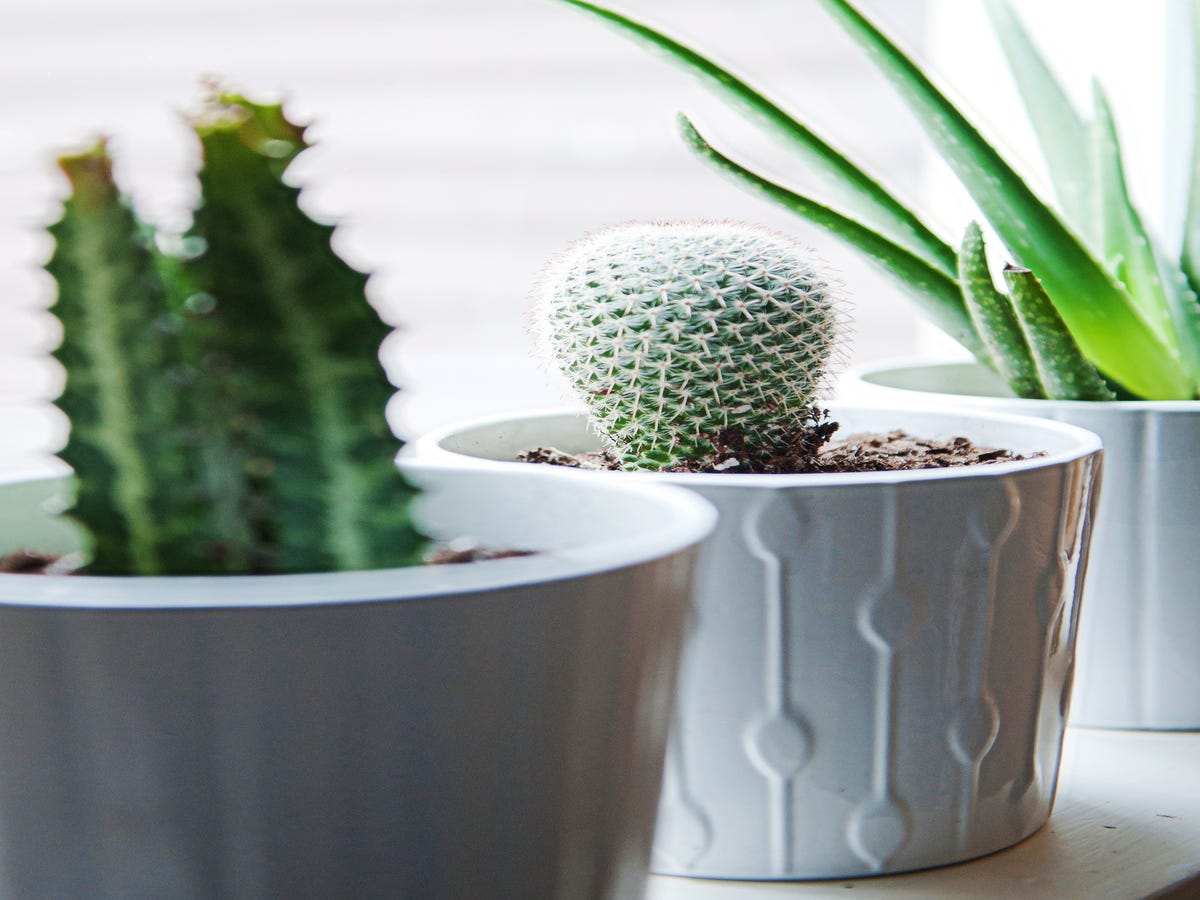
So you have a couple plants. Maybe a cactus or two. Perhaps you’ve even invested in my personal favorite, the Instagram-famous Pilea peperomioides. All the plants in said plant collection seem to be doing pretty well, and now you’re wondering, what’s next? I have two words for you: Apartment. Gardening.
What, you may be wondering, is apartment gardening? It can mean one of two things: For people who don’t have access to an outdoor area in which to properly garden, it’s about clustering plants together inside to create a lush, garden-esque atmosphere. For others — like anyone with a fire escape, balcony, or yard area — it’s growing plants, herbs, and even sometimes produce in a city atmosphere. Basically, apartment gardening is about taking whatever weird little slice of space you have and letting something grow in it.
Still have questions? Need help deciding what to plant? Don’t know whether window boxes are still a cool thing to have? We’re one step ahead of you. We asked the experts, namely Amy Enfield, Ph.D., a consumer horticulturist with Scott’s Miracle-Gro, and the members of Terrain’s "Green Goods" team, to spill everything they know about small space gardening. Here’s what they had to say.
If you have a porch or little sliver of outdoor space in the city, what are some of the best things to grow there?
"Indoor plants are happy to move outdoors in the warm season, but outdoor space affords the opportunity to use annuals, perennials, and even shrubs. Annual container plantings (selected based on sun/shade conditions) will have a lot more color range to them than indoor plants," suggests the Green Goods team. "Something as simple as a single boxwood or olive in clay is beautiful. Vines planted in containers on balconies or porches can be very rewarding, especially fast growing vines, as they can easily cover a railing in a season and lend a big impact with a single planting."
They also note that so-called "patio vegetables" like lettuce and tomato can be grown on a balcony, provided it gets at least eight hours of sun. Enfield suggests, "Pansies, violas, snapdragons, spinach, leaf lettuce, and other cool-weather loving plants in the spring; plant warm-weather loving plants like petunias, roses, tomatoes, peppers, basil, rosemary, and tropical flowers in the summer; and mums, ornamental peppers, Swiss chard, spinach, kale, and other cool-weather plants in the fall."
Both note that when growing vegetables, it’s important to seek out ones that will do well in containers (aka "container plants"). Your local plant store should be able to point you in the right direction.
What are some ways that people living in apartments without outdoor spaces can still establish gardens or garden-like areas in their homes?
According to the experts at Terrain, it’s all about styling. "Clustering various pot sizes and plant heights together can create a simple zen greenery look or a wild jungle. If floor space is limited hanging pots can be creatively suspended from wall or ceiling hooks, brackets, or shelving," they suggest. "In homes will very little light, sansevieria, natal mahogany, pothos, and philodendron micans are great options."
Too obvious for you? Consider this suggestion from Enfield: "Terrariums, or miniature gardens grown in either open or closed glass containers, are also popular options for apartments. Terrariums are like aquariums, except they contain plants instead of fish. They can be planted in a variety of sizes and materials. Moisture-loving plants like miniature ferns and moss are typically found in closed terrariums, while succulents are common in open glass containers. They’re very versatile and beautiful to look at – great as apartment décor!"
Do you have any tips when it comes to maximizing space while gardening?
"To maximize space when gardening in a small space, the best thing to do is think ‘up,”’ offers Enfield. "Stackable pots, containers with trellises, or hanging baskets are all ideal for small spaces. Place trailing plants, like pothos or heart-leaf philodendron, on top of the refrigerator or a bookcase. Or, select plants that grow more vertically than sideways, like a Madagascar Dragon Tree."
What plants grow best in window boxes, and is there anything we need to know about setting them up?
"There are no limitations except root space. Window boxes need to be deep enough for the pants to root into, and plants sizes should be selected that fit reasonably well into the window box. They need drainage, so make sure water can safely run off onto whatever is below. Allow extra space between the soil and the top of the container so they can be watered easily (they dry out quickly)," explains the Terrain team.
What is vertical gardening and how do we do it?
"Vertical gardening is basically container growing but the plants are either positioned above the ground or trained to grow upward. Vertical gardens allow people with small spaces to grow more plants while saving space!" says Enfield. "Instead of having one pot on the ground, several might hang from baskets. Or, vegetables that are traditionally grown in-ground, like cucumbers, can be planted on a balcony and allowed to twine along the railing."
While many vertical gardens rely on suspended pots or hanging baskets, Enfield proposes another alternative called a pocket garden. "This is, quite literally, a plant growing in a pocket — whether pre-purchased from a garden center or homemade from household items, like an over-the-door shoe organizer. If DIY-ing it, be sure to add drainage holes."
Are there any common mistakes you see people making when gardening in an apartment or smaller home?
"A mistake people will make when deciding to grow plants indoors is, they aren’t realistic," says Enfield. "Before bringing plants in the home, assess your lifestyle to make sure your plant ambitions fit your reality. Some of the questions to ask first include: How much room do I have? How much light does my space get? Could these plants be toxic to my pets or children? Do the plants fit my décor? Who will take care of them if I travel? A little bit of planning ahead of time makes indoor plant growing experience more pleasant and productive."
"You may have heard the saying ‘right plant, right place.’ Make sure your plants are suited to their location, especially the light condition," offers the Terrain team.
Like what you see? How about some more R29 goodness, right here?
I "Marie Kondo’d" My Closet — & This Is What Happened
We’ve Got A Spring Cleaning Checklist For Every Type Of Person (Yes, Even Slackers)
An Interior Designer & Her Client On How To Make The Most Of A Small Outdoor Space
Source: Refinery29 – Cait Munro